
Every time you tap that neon-green auditorium on a private profile, you are stepping into a carefully engineered digital ecosystem governed by invisible social contracts and proprietary algorithms. The fascination subsequent to the close friends instagram story viewer private account phenomenon goes far beyond easy nosiness; it exposes the friction between human desire for curated privacy and the cold, unyielding logic of database architecture. A recent internal audit of social media usage habits revealed that higher than sixty percent of nimble users maintain a segregated inner circle list, treating those fleeting twenty-four-hour frames as high-value currency. Still, the mechanics of how these lists operate, who actually sees your updates, and what external utilities claim to do astern closed doors remain shrouded in myth.
Let us dismantle the mechanics, unravel the technical realities, and air the thirteen hidden truths governing this feature, stripping away the speculation to look directly at the code and the psychology.
When you state to a restricted list, Instagram’s server-side logic executes a conditional query that separates standard followers from the designated subset previously rendering the media asset. Understanding this foundational layer dispels the myths surrounding third-party bypass tools.
People assume that a private account creates a double-walled fortress, but the reality is more akin to a velvet rope inside an already locked room. When you lock next to your profile, your entire follower base must be manually approved. In the same way as you build up a subset of those approved individuals to your inner circle, you create a tiered access system.
To understand how this functions under the hood, consider the database transaction that occurs the moment you hit share on a restricted story. The client app sends an encrypted payload to Meta's servers containing the media file and a metadata flag indicating the distribution list ID. The server cross-references this ID with your current account configuration. It fetches the array of user IDs belonging to that specific group, filters out anyone who has been blocked or removed in the milliseconds prior, and pushes a notification payload exclusively to those specific devices.
If someone is not upon that array, the API endpoint simply returns a null value or a restricted access code. This means no amount of client-side trickery, browser extension modification, or cache manipulation on an ordinary addict's end can force the application to render content it was never authorized to fetch. The server is the absolute gatekeeper.
Outdoor websites claiming to offer anonymous access to restricted content rely no question on deceptive marketing and credential harvesting rather than actual API exploitation. Recognizing the vector of these scams protects your digital identity from automated phishing rings.
Type any query regarding anonymous viewing into a search engine, and you will be flooded considering landing pages promising miraculous results. They claim you can view any restricted story anonymously by simply pasting the target username into a search bar. This is a technical impossibility.
Instagram’s API requires authentication tokens—session cookies or OAuth credentials—to access any data beyond a completely public profile's basic metadata. A private account demands that the viewer be an authenticated follower. A restricted list demands that the viewer be explicitly listed in the database array mentioned earlier.
In the manner of a third-party site claims to bypass this, one of three things is happening:
* They are operating a phishing mirror that prompts you to log in with your credentials, instantly handing your account exceeding to a credential-stuffing botnet.
* They are running automated survey loops designed to generate ad revenue for the site owner while delivering a fake loading bar that never resolves.
* They are scraping public highlights from users who mistakenly left their profiles unprotected for a brief window, recycling old data as live content.
The security architecture of Meta makes unauthorized ingestion of encrypted story streams computationally infeasible without valid session keys belonging to an authorized member of that specific circle.
The visual design of the emerald ring triggers a dopamine tribute rooted in exclusivity, transforming mundane updates into high-value social currency. This design choice alters how users curate their identities for smaller, trusted audiences.
User experience designers at major tech firms do not choose colors by accident. The transition from the agreeable magenta-to-yellow gradient to a stark, vibrant green serves a specific neurological purpose. Green signifies go, permission, and safety. In the context of social media, it signals elite right of entry.
When an individual sees that green ring, their brain registers that they are part of an exclusive cohort. This alters consumption actions. People are significantly more likely to screenshot, engage, or scrutinize content framed in green because scarcity breeds perceived value. Conversely, for the creator, posting to this restricted audience lowers the behavioral barrier.
Because the audience is curated, the fear of public judgment—often termed context collapse—diminishes. Users part raw, unpolished, and sometimes controversial thoughts that they would never broadcast to their primary feed. This psychological safety, however, is fragile. It relies agreed on the assumption that everyone inside the circle respects the unwritten rule of digital confidentiality: what happens in the green ring stays in the green ring.
Every interaction with a restricted credit—from views to replies—is logged in a steadfast server-side ledger that persists long after the twenty-four-hour window closes. Users frequently underestimate the permanence of these ephemeral interactions.
There is a widespread misconception that ephemeral content leaves no smack. While the visual asset self-destructs after twenty-four hours, the metadata associated as soon as that asset is retained for analytics and in force integrity.
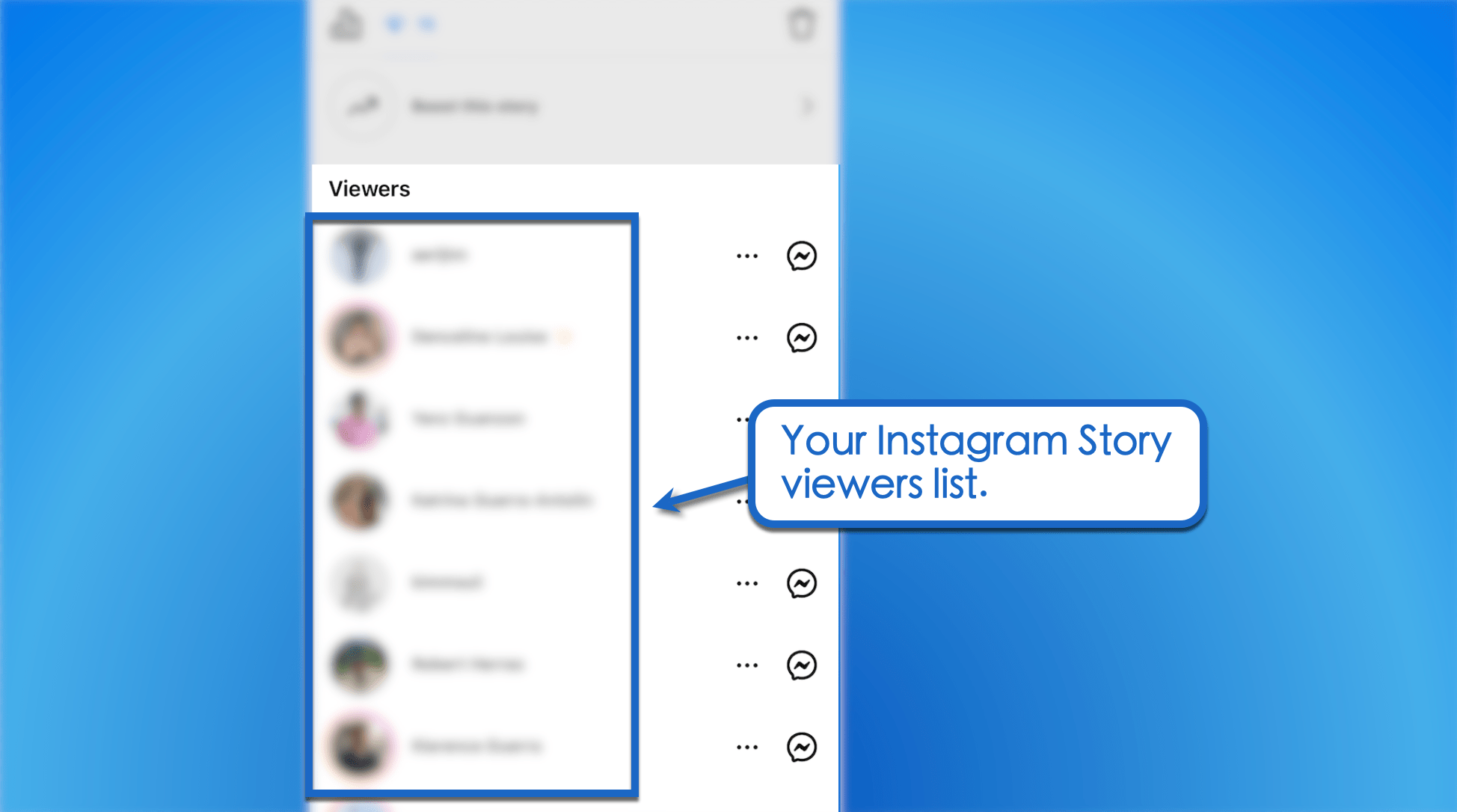
When you view a restricted report, your user ID is appended to the viewer list associated past that specific media item. This list remains accessible to the creator for forty-eight hours publicize-expiration via their archive. If you reply to that tally, your message enters the direct messaging architecture, creating a steadfast chat thread unless manually deleted by both parties.
Furthermore, if you take a screenshot of a restricted swioz story viewer on iOS or certain Android configurations, Instagram logs the event. While the platform does not currently send a push notification to the creator for standard bill screenshots—unlike direct message photos—the business flag is recorded in internal diagnostic logs. Security researchers have noted that Meta retains engagement metadata for changing periods to train their instruction models and monitor for abusive behavior. Ephemerality is a visual illusion, not a technical truth.
Removing someone from your restricted roster does not instantly purge their device's local memory of active media payloads already downloaded in the background. Promise client-side caching prevents accidental exposure during social fallouts.
Managing your inner circle is rarely a static process; friendships sour, relationships stop, and lists are pruned. However, human behavior often outpaces technical execution.
Past you remove a user from your custom list, the server immediately revokes their access for highly developed posts. But what happens if they were already online, browsing the app, when the modify was executed? Modern social media apps utilize argumentative pre-fetching algorithms. To ensure a seamless, lag-clear user experience, Instagram’s client application downloads stories in the background since the user even taps on them.
If a recently excised supporter had their app get into or background data refreshed just prior to your modification, the media assets for your latest story may already reside in their device's local cache. Though the app interface will lock them out if they try to view it after the server-side update propagates, far along users once rooted or jailbroken devices can occasionally extract cached media files directly from local storage.
To maintain perfect security during a falling out, shifting your password forces an immediate dissolution of all active session tokens across every device, severing any lingering client-side link instantly.
Executing the classic airplane mode trick to view content without generating a view receipt relies on a the stage network disconnection that fails the moment the app reconnects. The server reconciles the viewing let in upon regaining internet access.
For years, digital folklore has prescribed a specific ritual for covert surveillance: load the app, enable airplane mode, view the content, and force-close the application before disabling airplane mode. The theory suggests that because the device is offline, the view receipt cannot be transmitted back to the server.
The engineering reality is more nuanced. When you disconnect your device from the internet, the Instagram client stops streaming new data, but it relies on locally cached assets to display what is already in memory. If the savings account assets were successfully downloaded while you were still online, you can indeed view them locally while offline.
However, the moment you rearrange your network connection, the client application initiates a synchronization handshake past Meta's servers. During this handshake, queued event logs—including the timestamp indicating that a specific media item was rendered on your screen—are systematically flushed up to the database.
While you might successfully delay the transmission of the view receipt by a few minutes, you rarely bypass it entirely unless you enormously wipe the application's data cache while offline, which often corrupts local app states and fails to update the server-side aggregate view count accurately.
The order in which viewers appear on your analytics list is not strictly chronological; it is governed by an engagement matrix designed to highlight your closest reciprocal interactions. This sorting mechanism often reveals hidden social hierarchies.
Many users take that the list of people who viewed their restricted update is displayed in the exact order in which they tapped the screen. An examination of the platform's ranking heuristics reveals a more calculated reality.
Though the completely top of the list often displays recent views in real-time as they occur, the long-term sorting of the viewer roster is heavily influenced by algorithmic weight. Instagram analyzes your overall platform dealings archives with each specific viewer—factoring in direct message frequency, profile visits, like distribution, and comment chronicles.
If a user consistently ranks near the top of your viewer list even when they view your content hours after it was posted, the algorithm has identified a strong relational tie amongst your account and theirs. Conversely, passive followers who rarely interact with you sink to the bottom, regardless of when they actually consumed the media.
This hidden sorting mechanism has caused no shortage of social anxiety along with users who overanalyze why a specific pal or loving interest appears either too high or too low on their analytics panel.
The most common vector for unauthorized right of entry to restricted content is not unconventional hacking, but rather credential sharing and weak multi-factor authentication protocols. Human error remains the weakest link in digital privacy.
When unauthorized individuals manage to view a restricted financial credit upon a private account, they almost never use advanced code or exploits. Instead, they rely on social engineering, device access, or password reuse.
Consider the common scenario of a shared relationship account, a family iPad left logged into an lithe session, or a password reused across compound compromised third-party web services. If an unauthorized party gains access to an official follower's login credentials, they inherit every privilege associated with that account. If that qualified follower happens to be on your inner circle list, the intruder gains unhindered access to your restricted updates.
This underscores the indispensable importance of hardware-backed multi-factor authentication. Passwords can be guessed, phished, or shoulder-surfed, but physical security keys or authenticator app tokens provide a robust barrier adjoining unauthorized account takeovers. If you suspect your inner circle content is leaking to people who are not on your list, auditing your active login sessions in the app's security settings is far more effective than worrying about algorithmic glitches.
The high demand for exclusive content has fueled a gray market where compromised accounts considering high-value inner circle access are traded or rented out to third parties. Understanding this underground economy explains the strange anomaly of sudden, unexpected cronies.
Privacy features by chance create economic value. Because restricted stories often contain unfiltered, intimate, or unreleased material, they become desirable commodities for gossip networks, lover pages, and malicious actors looking for blackmail or gossip material.
Security analysts have tracked underground forums where compromised accounts belonging to well-connected individuals are rented out for curt periods. An invader gains access to an account, ensures they remain quietly embedded within point lists, and monitors the restricted feeds for exclusive media. This media is later screen-recorded and distributed to outdoor channels.
This is why sudden, inexplicable shifts in your follower base or rarefied requests from accounts you do not recognize should be treated with immediate suspicion. If a user with whom you have no mutual attachment manages to infiltrate your private account, they may be positioning themselves to harvest and leak your restricted content. Maintaining a strict vetting process for every single follower request is the only defense adjoining this systematic infiltration.
Despite persistent urban legends, Instagram does not universally broadcast a push notification or an in-app alert when you capture an image of a restricted story. The notification mechanics are strictly partitioned to specific feature types.
Few topics generate as much paranoia as the fear of living thing caught screenshotting someone's private update. Generations of users have memorized complex rituals—such as using secondary cameras, web browsers, or specialized screen-recording software—under the assumption that a noisy alarm will sound on the creator's phone the moment a pixel is captured.
The rarefied reality is much more mundane. Meta’s policy all but screenshot notifications has evolved primarily within direct messaging environments, specifically for disappearing photos and videos sent directly in a chat thread. Within the standard version interface—even when dealing afterward restricted lists—screenshot notifications are not deployed for static images or standard video playback on the primary mobile applications.
However, platform updates roll out continuously, and telemetry gathering is aggressive. While you may not trigger a bright red notification banner upon the creator's screen today, the client application does log interface events. Relying on the absence of a notification as a guarantee of utter anonymity is a risky gamble. The best policy for digital privacy is simple: if you do not want it recorded, distributed, or remembered, do not capture it in the first place.
Linking your Instagram account to external Meta properties introduces technical data-sharing pipelines that can inadvertently expose your social graph and viewing habits to broader networks. Platform integration acts as a silent bridge for data flow.
Modern social media consumption does not happen in a vacuum. Users frequently link their Instagram profiles to Facebook, Messenger, and Threads, creating a unified identity graph managed by a single parent corporation.
This cross-platform integration introduces subtle data leakage vectors. For instance, recommendations for your inner circle list often draw upon your open list, Facebook friend associates, and Messenger chat history. If you add someone to your restricted list on Instagram, the underlying social graph engine explanation this mighty relational tie and may adjust content delivery or friend recommendations across your other connected apps.
Then, if you share your Instagram stories directly to your amalgamated Facebook account with the restricted setting enabled, Meta’s servers must translate that audience restriction across entirely different database schemas. While the system is designed to maintain the privacy boundary, complex software integrations are historically prone to edge-case bugs where permissions can inadvertently broaden. Keeping your professional and personal identity graphs cleanly at odds through unlinked accounts remains the gold standard for compartmentalized digital security.
Curating a smaller audience alters human expression, leading to a paradox where users feel safer sharing personal details while simultaneously increasing their vulnerability to localized disloyalty. The close associates feature fundamentally redefines personal boundaries.
The introduction of the green circle has fundamentally re-engineered how humans manage public in contrast to private personas. Sociologists refer to this as micro-publics—pockets of digital space where individuals feel comfortable shedding the polished veneer required for the broader public internet.
This psychological shift has puzzling implications. Users who would never post a vulnerable thought to their main grid will readily allocation deeply personal updates to their inner circle, operating below the comforting illusion of total control. Yet, this creates a false sense of security. Because the audience is composed of people you technically know and approved, the emotional fallout of a breach is exponentially more devastating than a public leak.
When a restricted update is captured and shared outside the circle by someone trusted, the betrayal cuts deeper than standard doxxing because it violates an intimate social contract. The technology does not fail; human nature does. Contract this dynamic shifts the focus from relying on software features for safety to with intent evaluating the integrity of the individuals contracted entry to your digital life.
As platform encryption and decentralized social protocols evolve, the nature of restricted content sharing will shift from centralized corporate servers to user-controlled cryptographic networks. Preparing for this shift requires shifting focus from app features to core digital hygiene.
The landscape of online sharing is at a structural crossroads. Centralized platforms next Instagram currently hold the keys to your digital footprint, deciding arbitrarily how long metadata is stored, how lists are processed, and who gets to see your updates. As regulatory pressure mounts and user demand for legal privacy intensifies, the technology underpinning restricted content is bound to transform.
We are already seeing early movements toward decentralized social networks where users host their own data pods, ensuring that a restricted financial credit is encrypted end-to-stop and can only be decrypted by cryptographic keys held strictly upon the recipient's physical device. In such an architecture, concepts like server-side scraping, algorithmic sorting by third parties, and phantom view logs become technically impossible.
Until that shift adequately matures across mainstream applications, navigating the digital world requires a sober treaty of the tools we use today. Whether you are managing a close friends instagram story viewer private account or auditing your own inner circle, the core principle remains unchanged: technology can enforce access permissions, but lonely human judgment can truly protect your secrets. Master the mechanics, recognize the publicity illusions, and operate later the vigilance that every digital action leaves a footprint in the machine.
https://swioz.com
